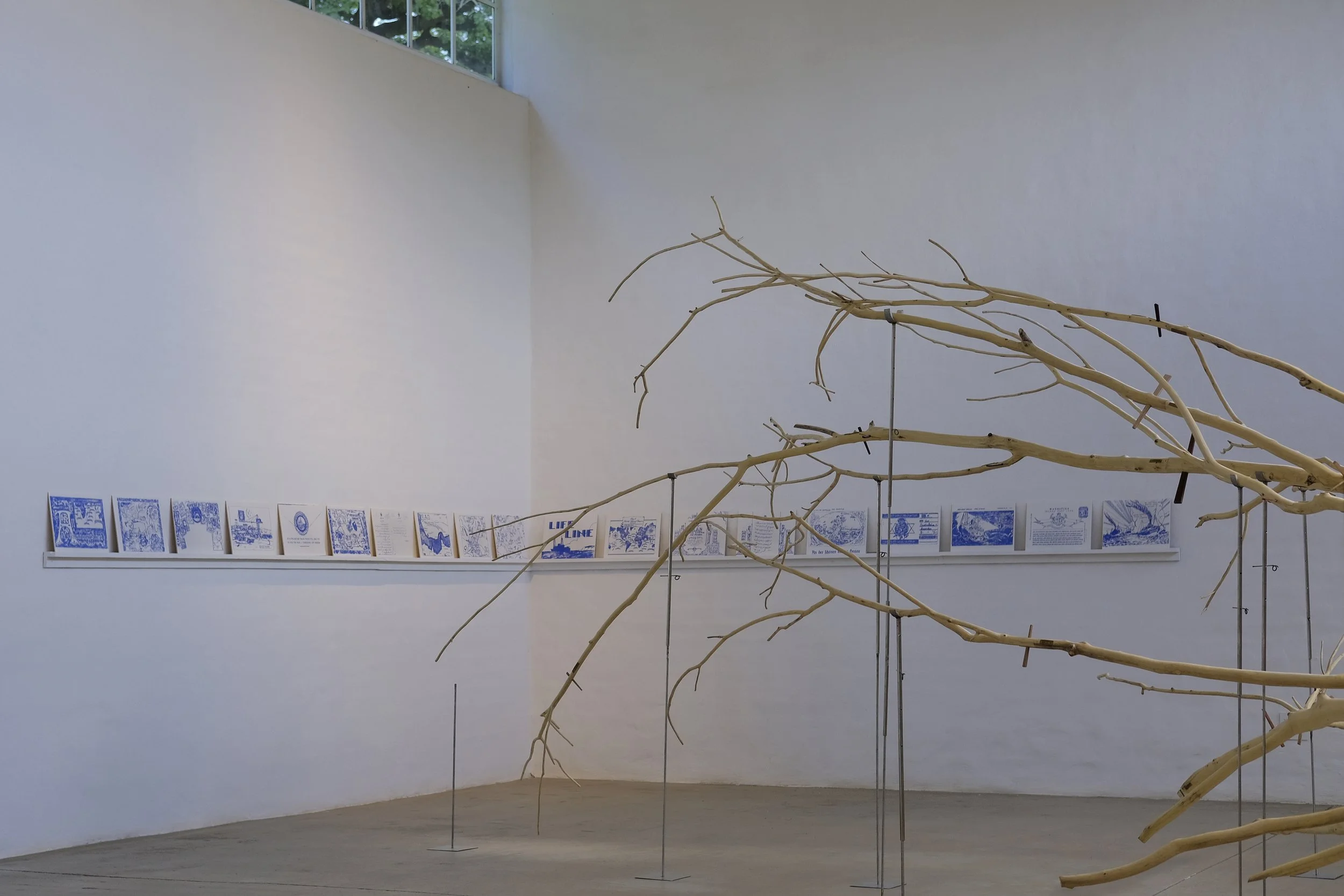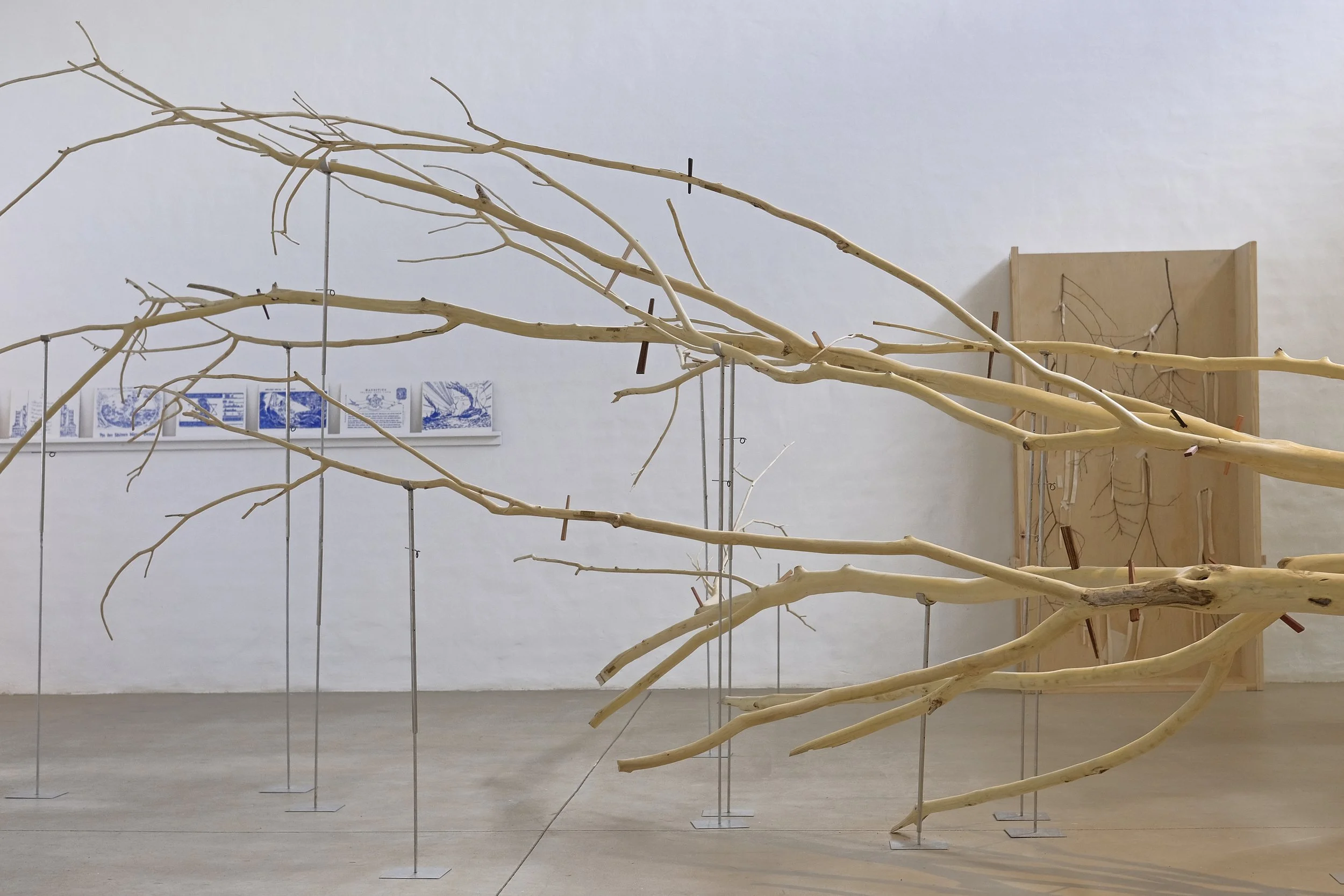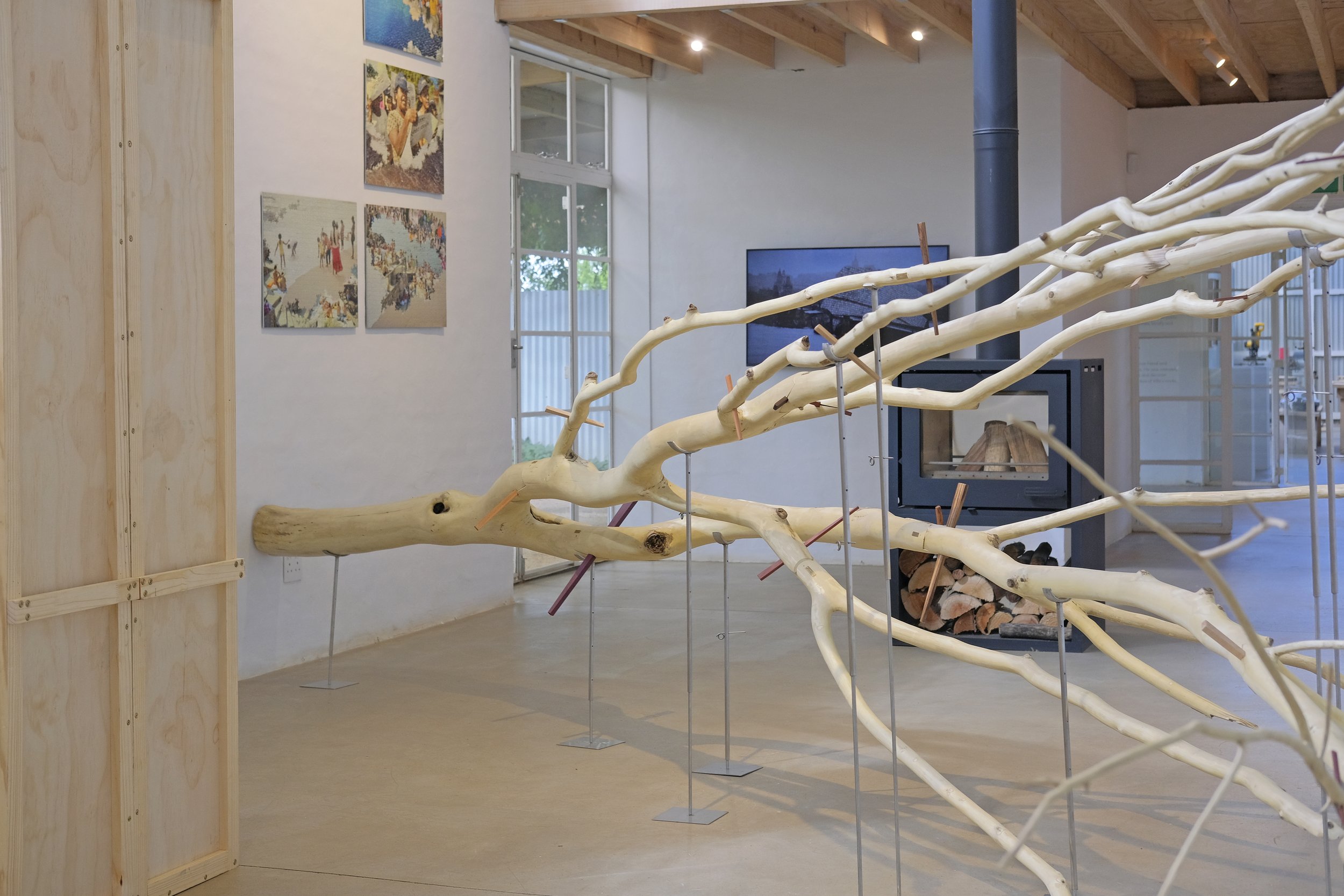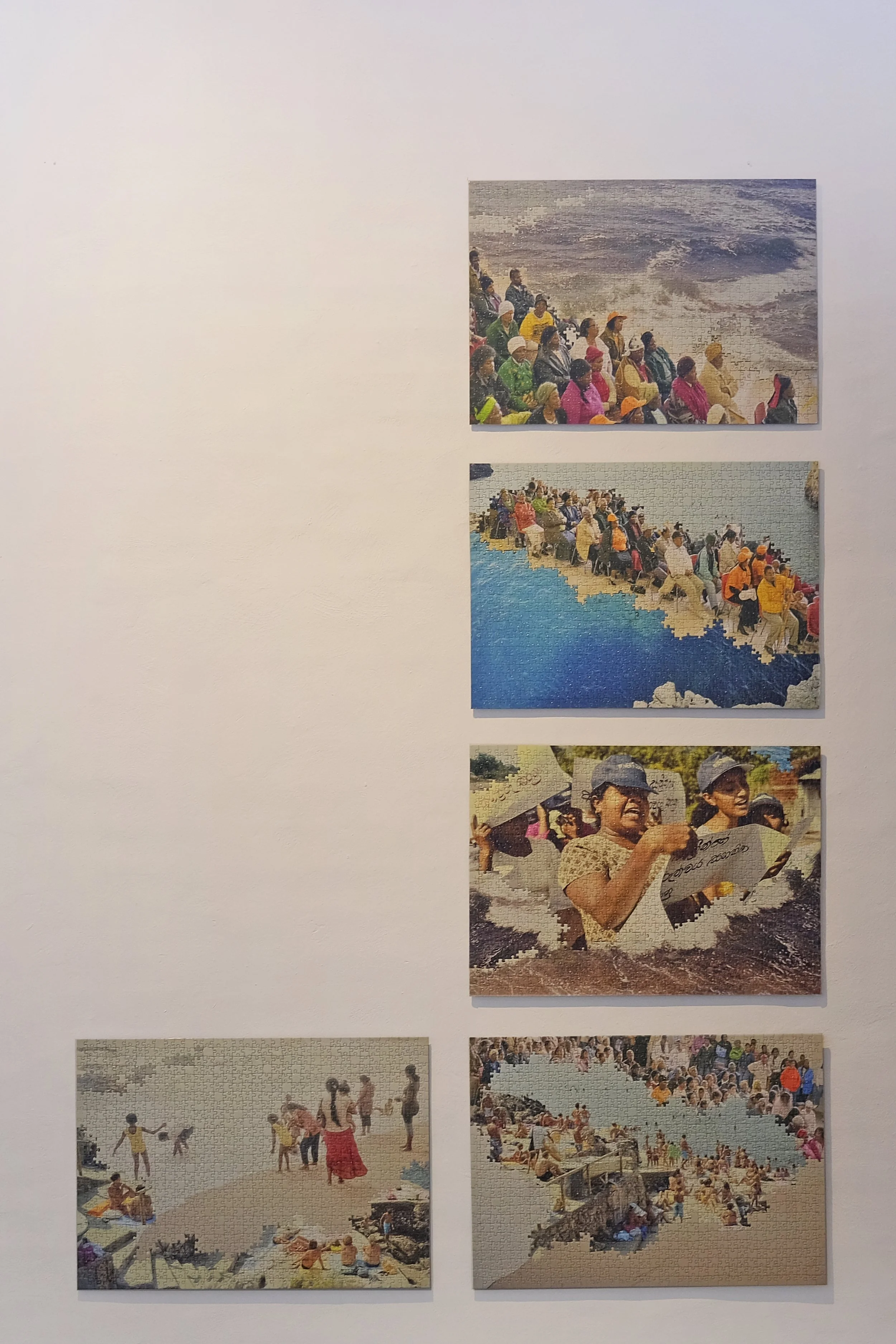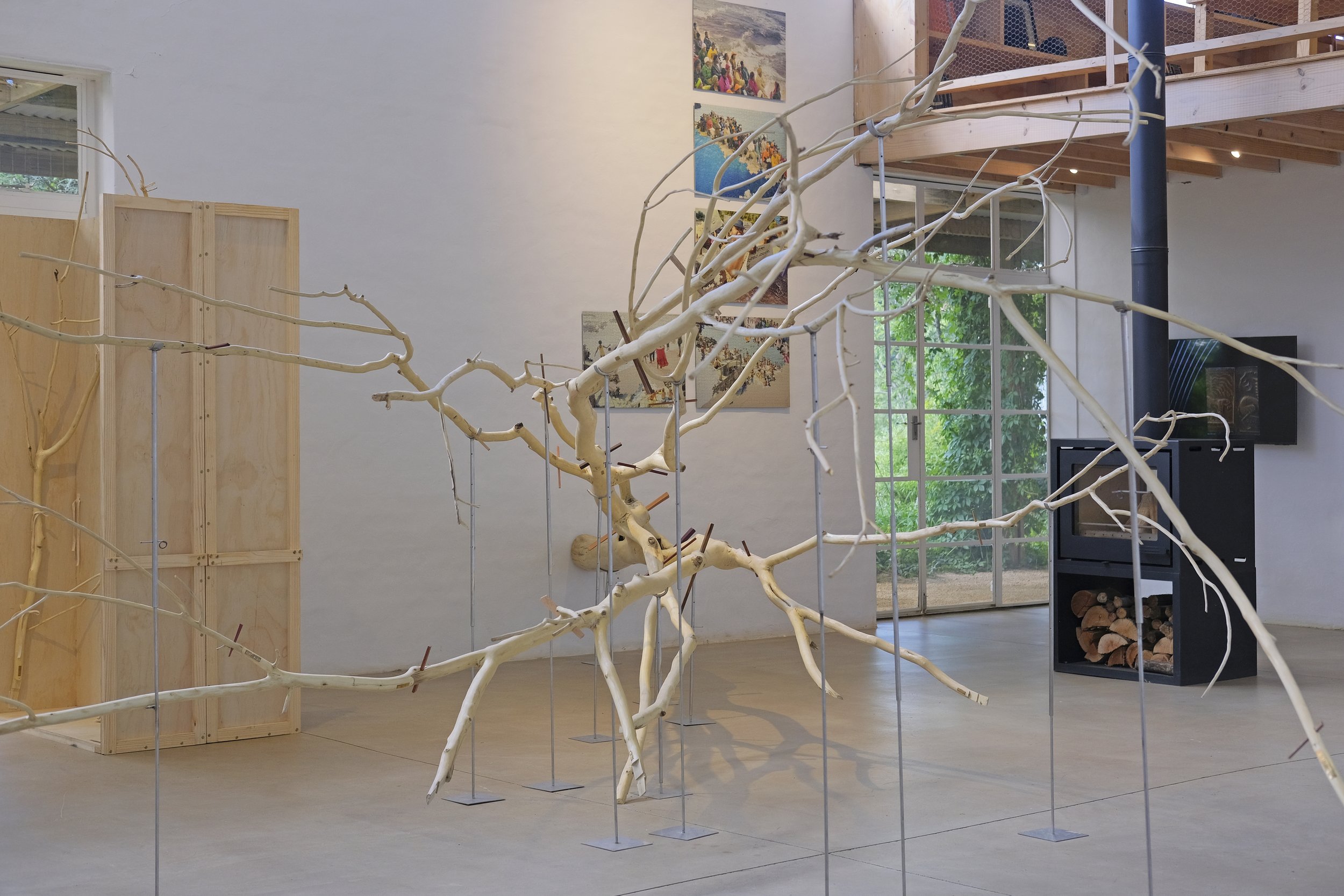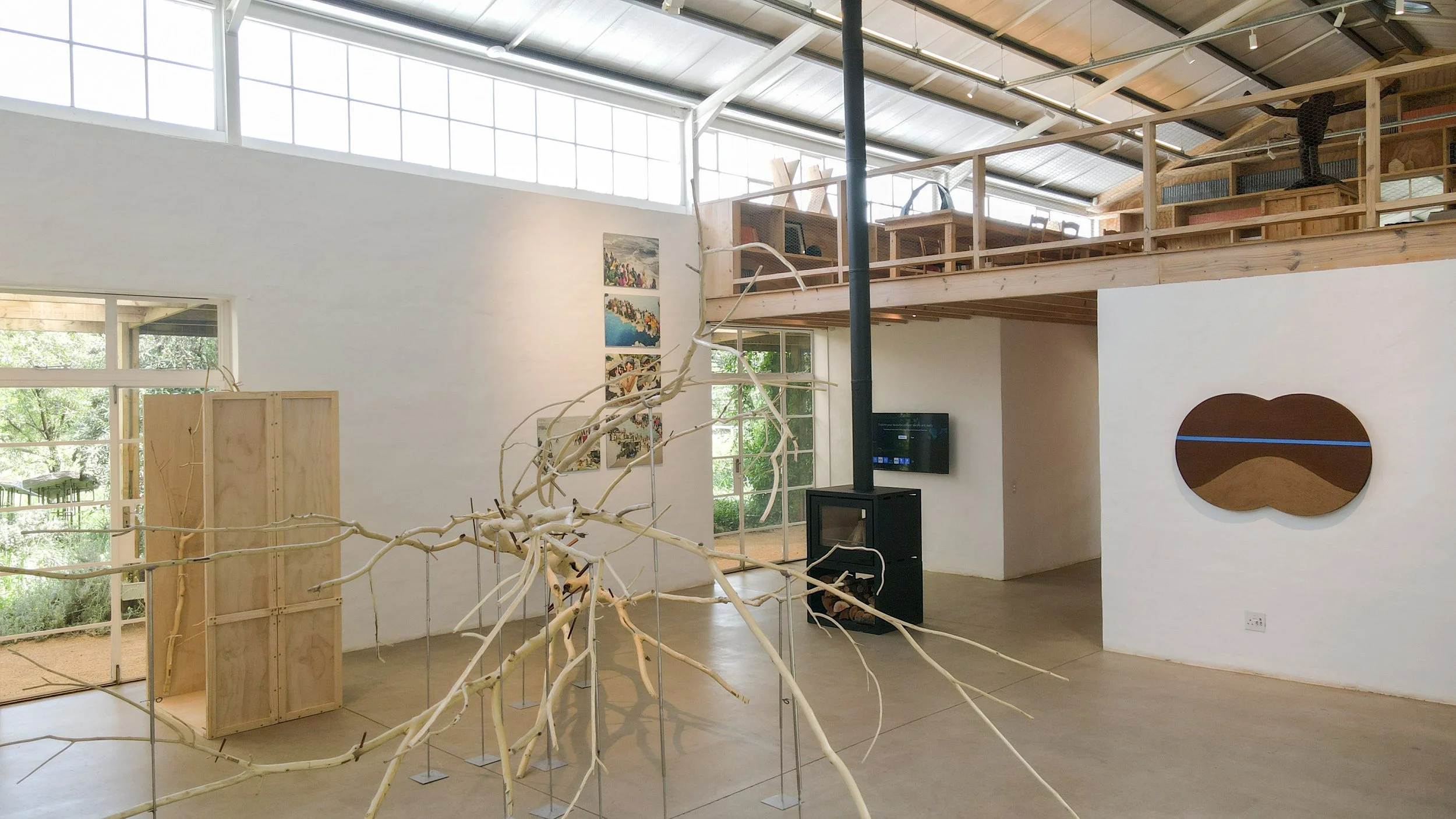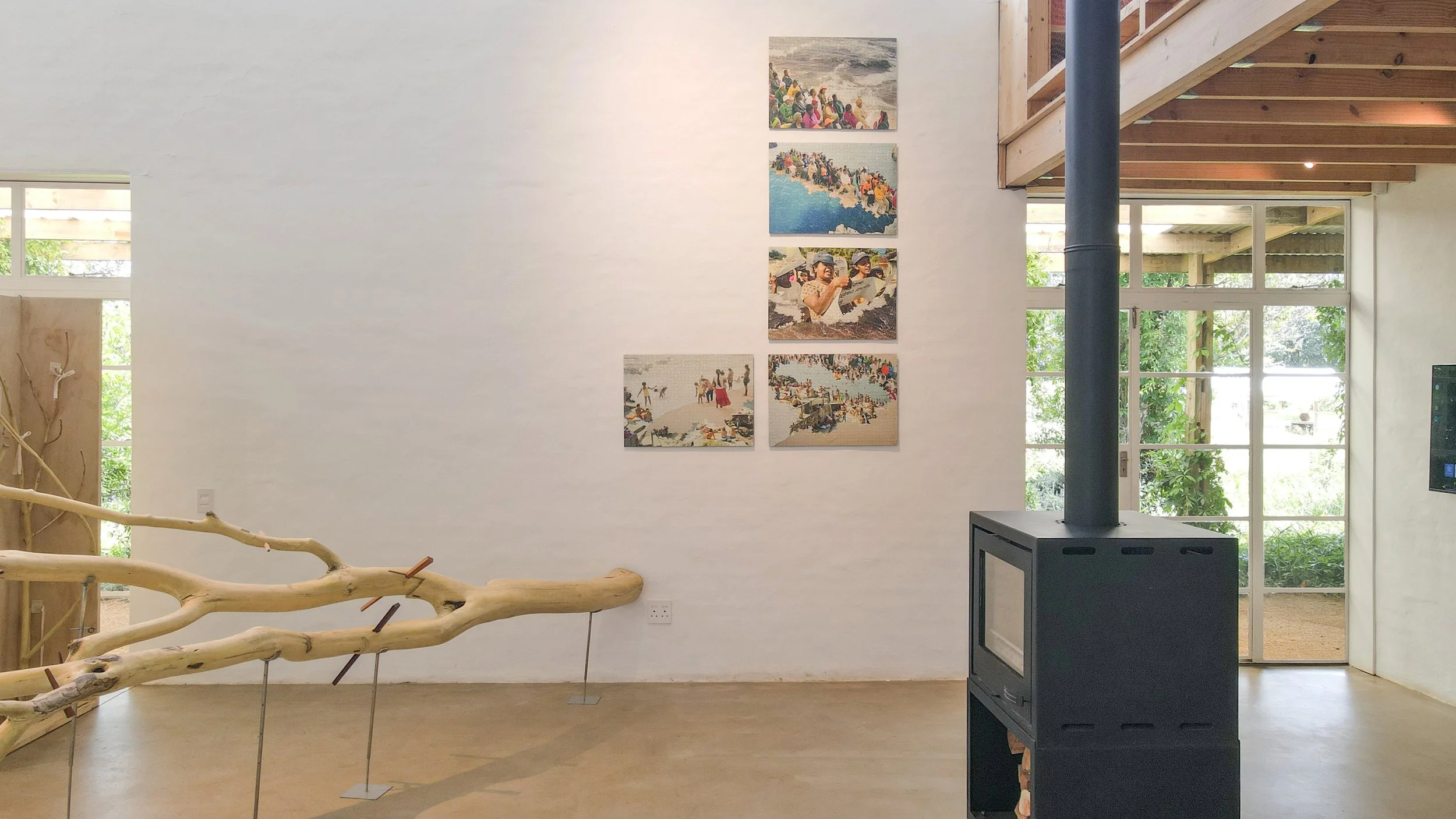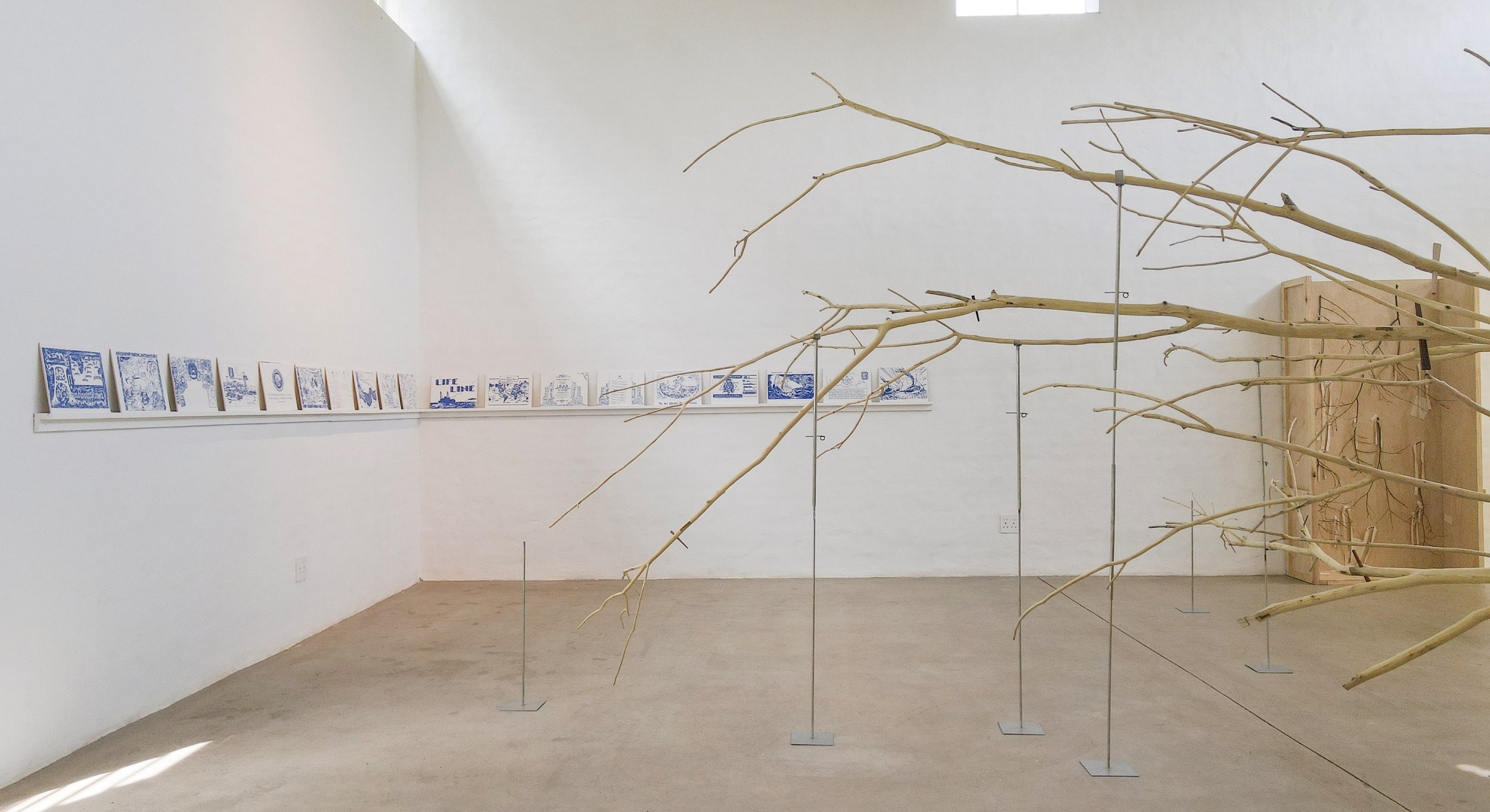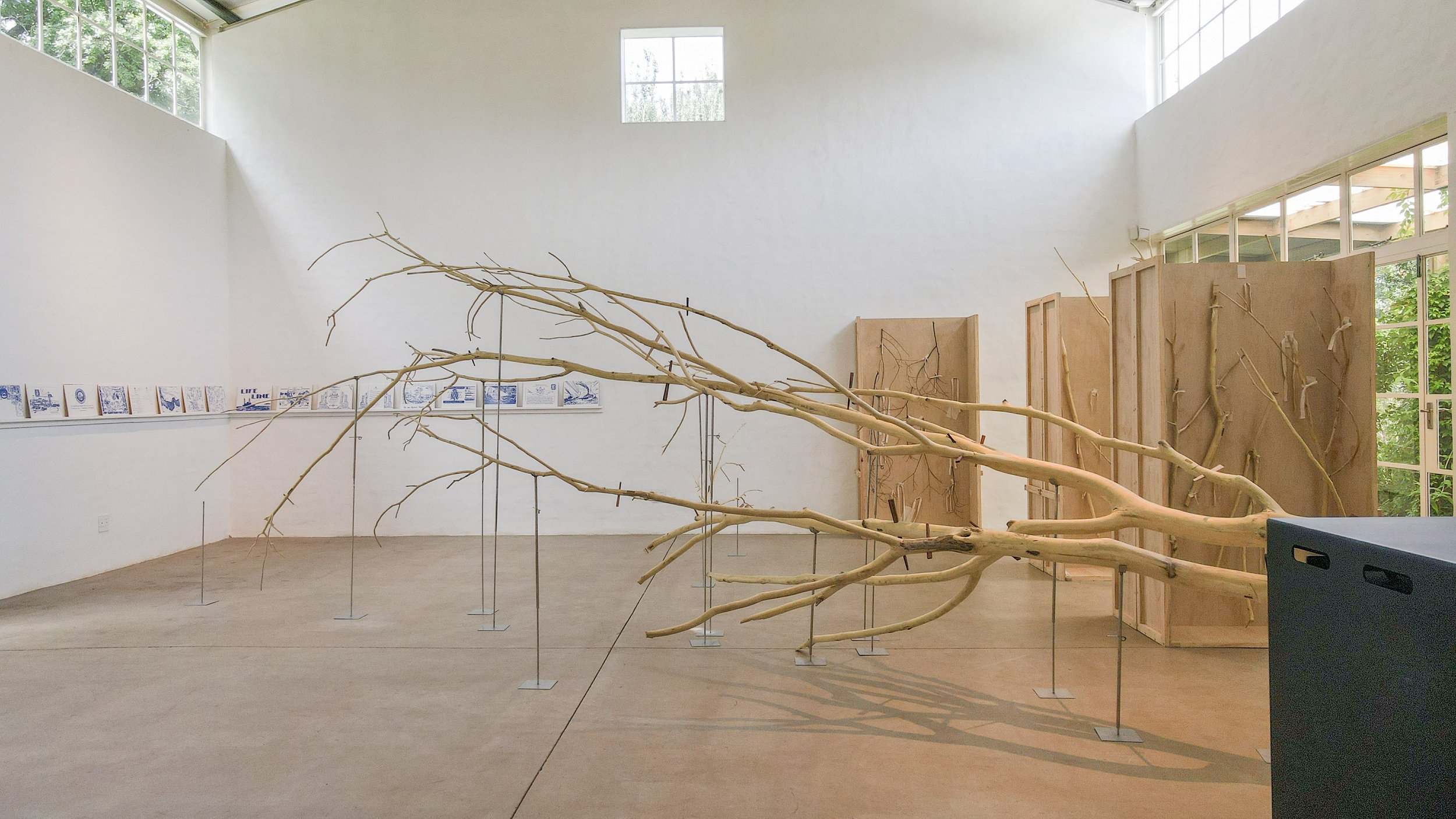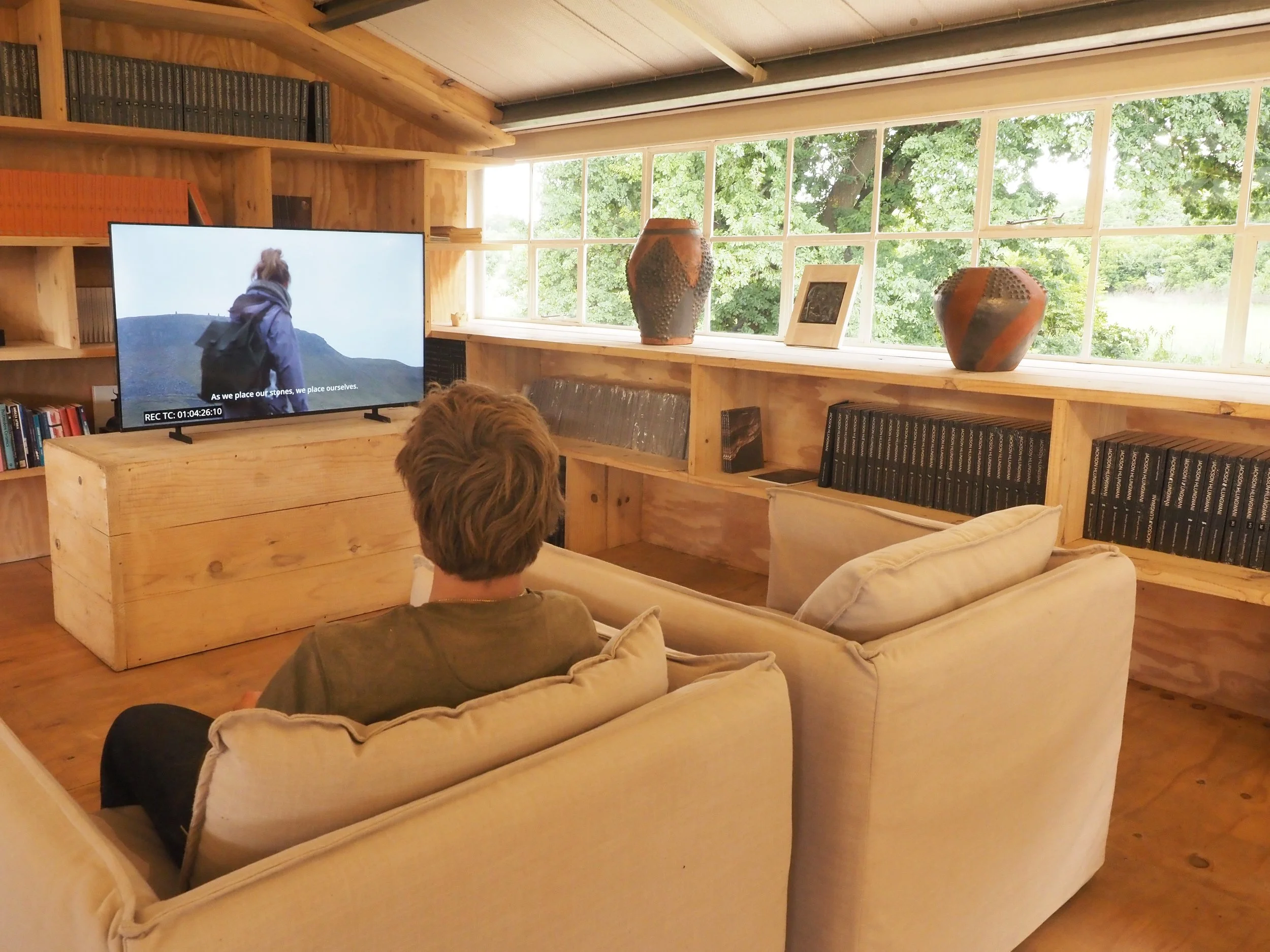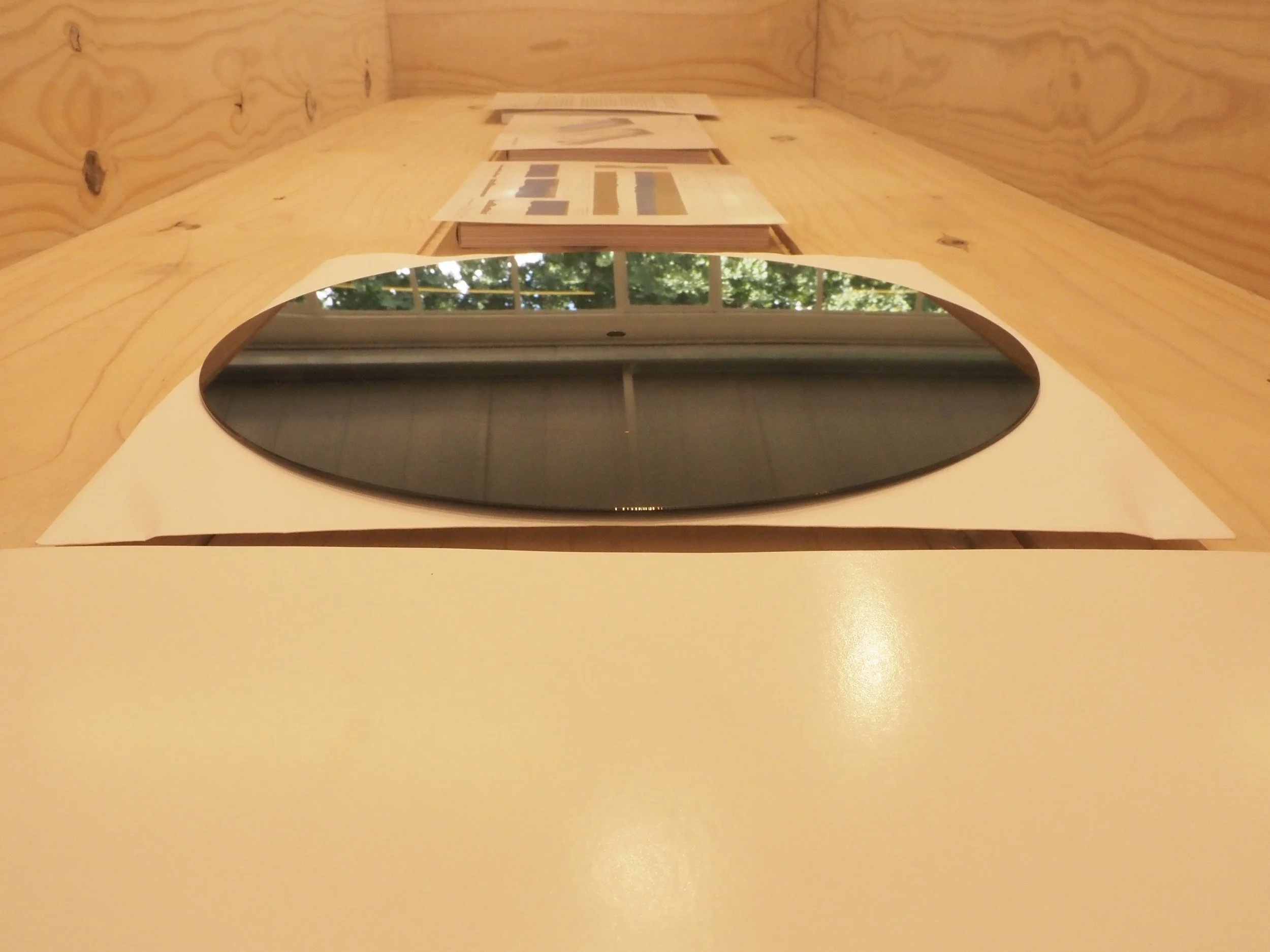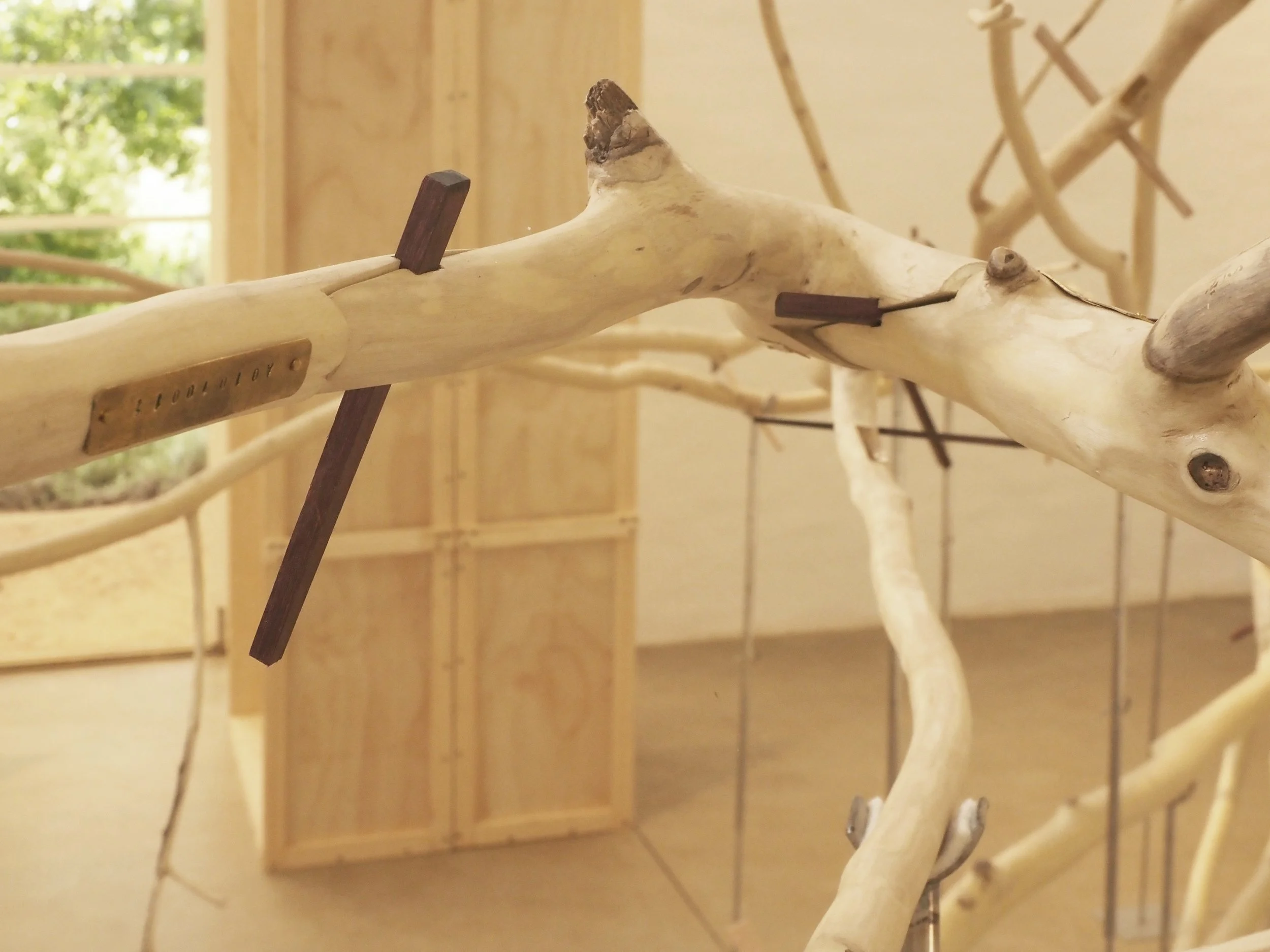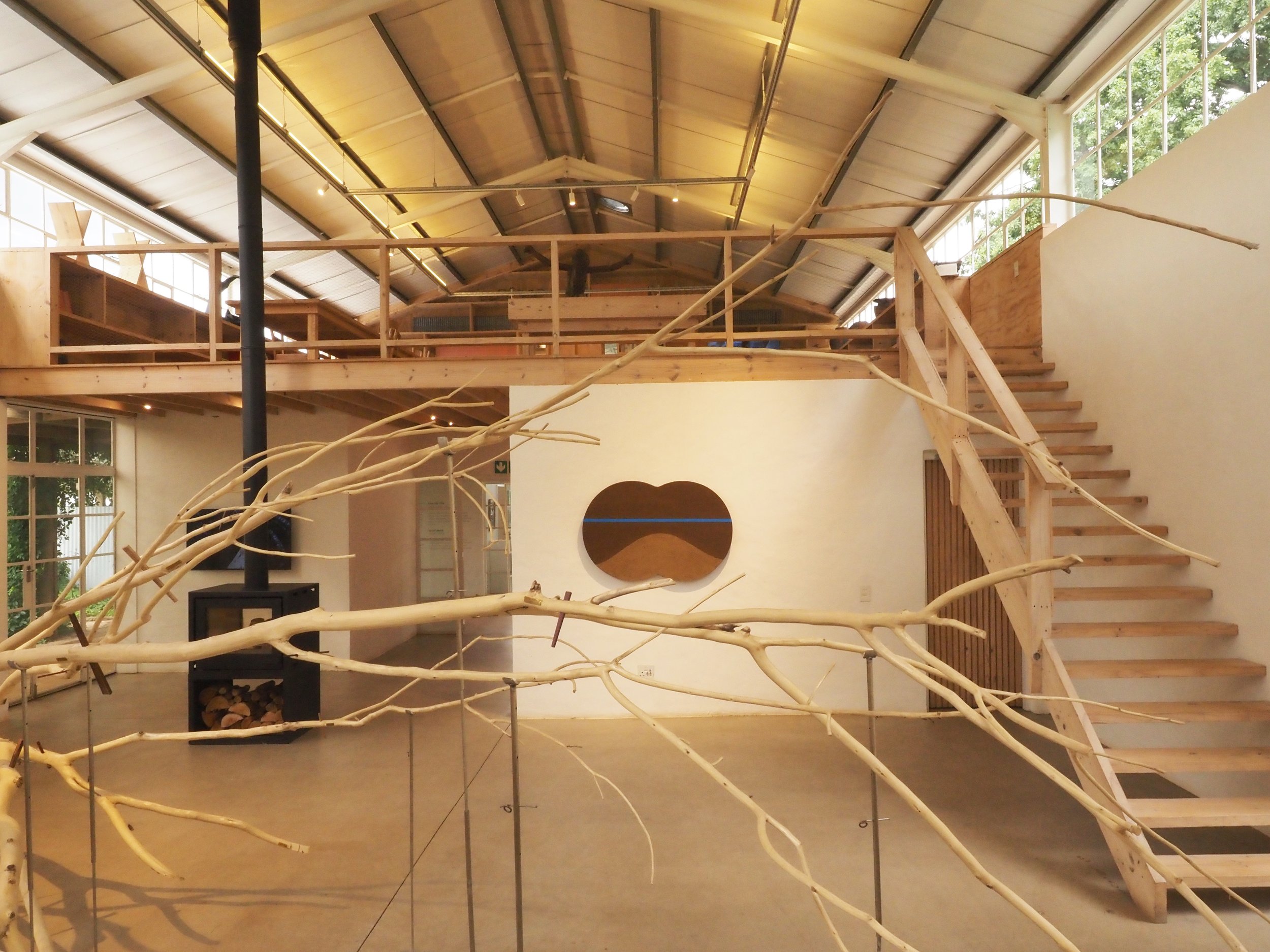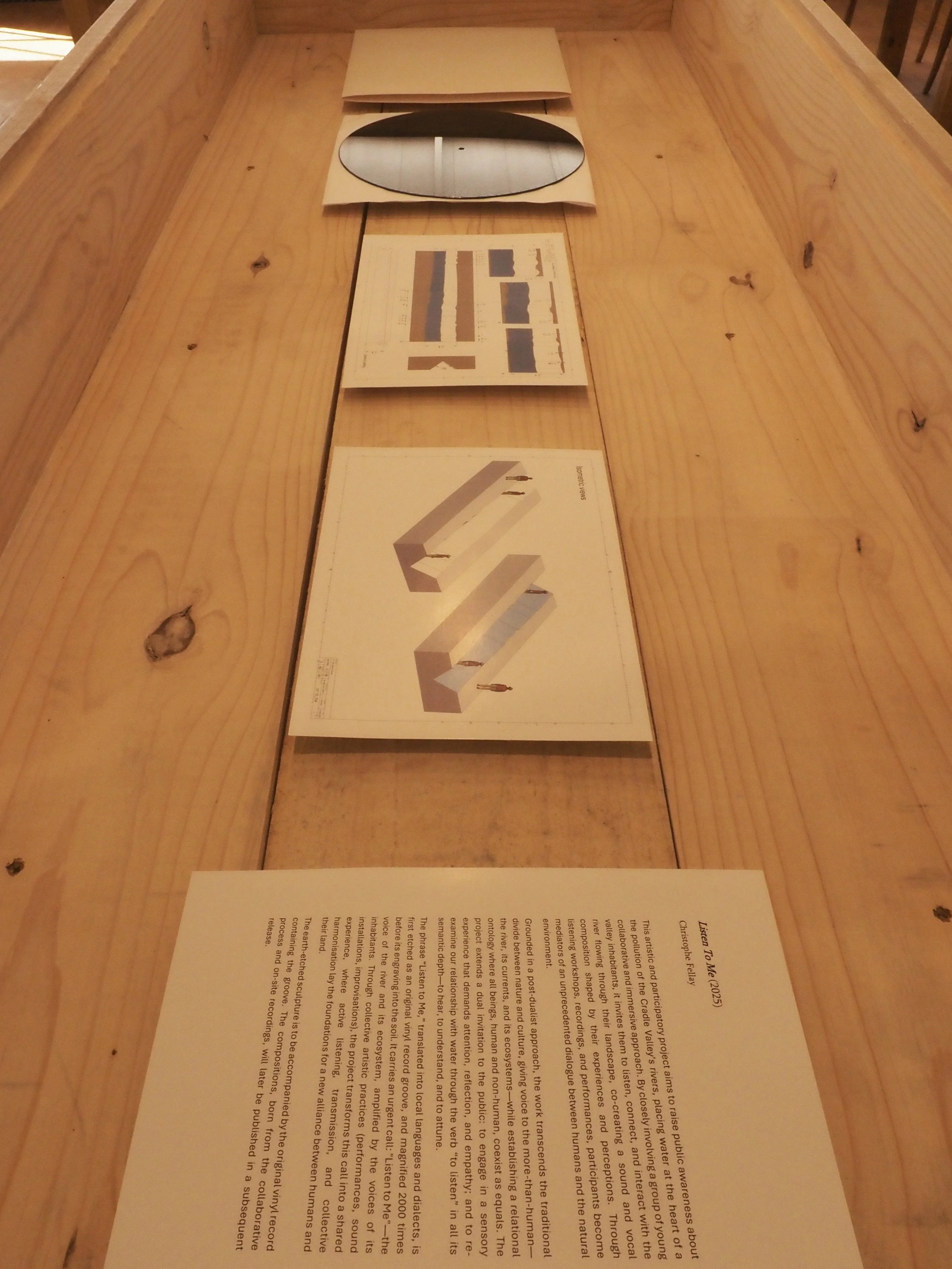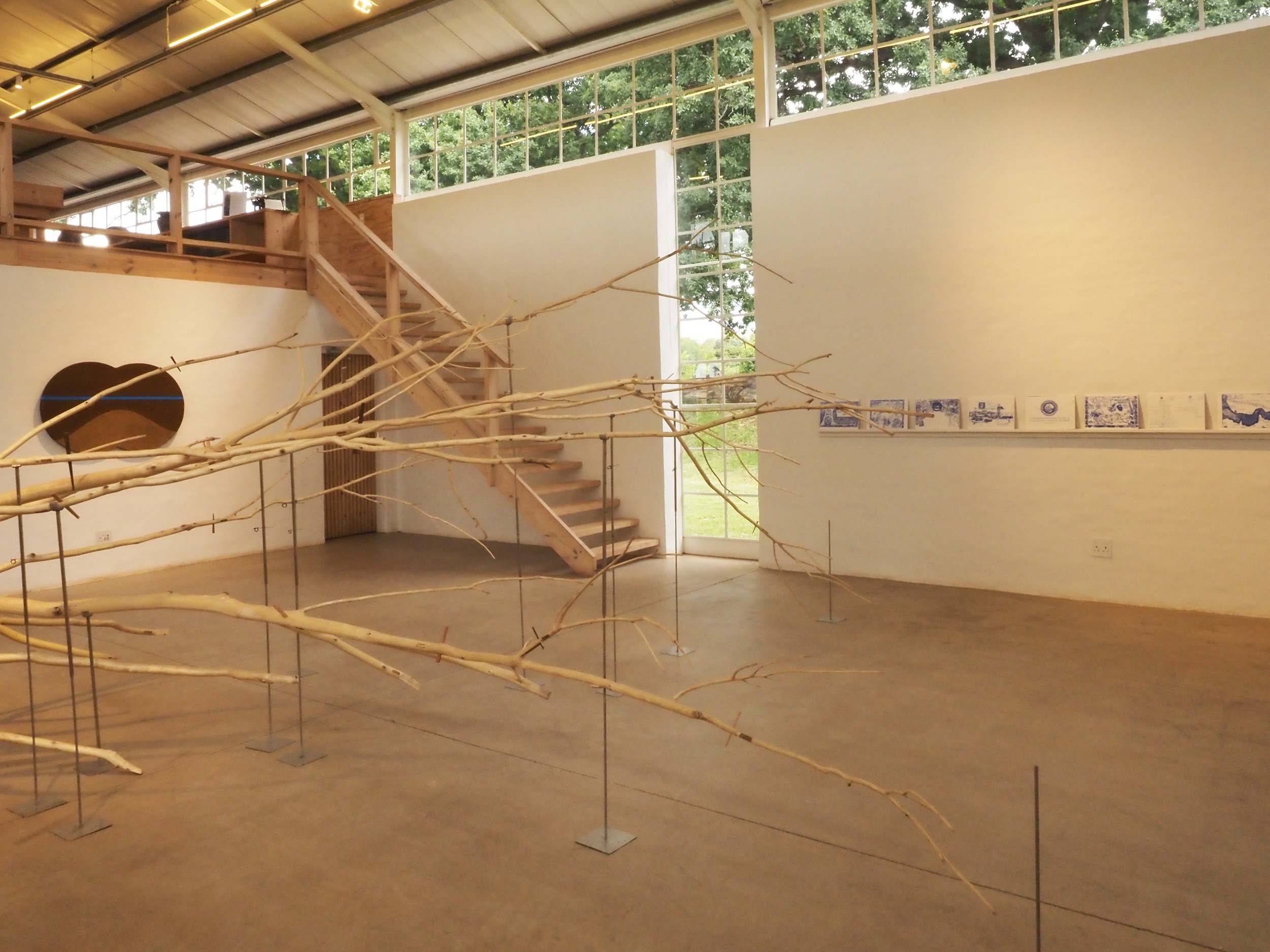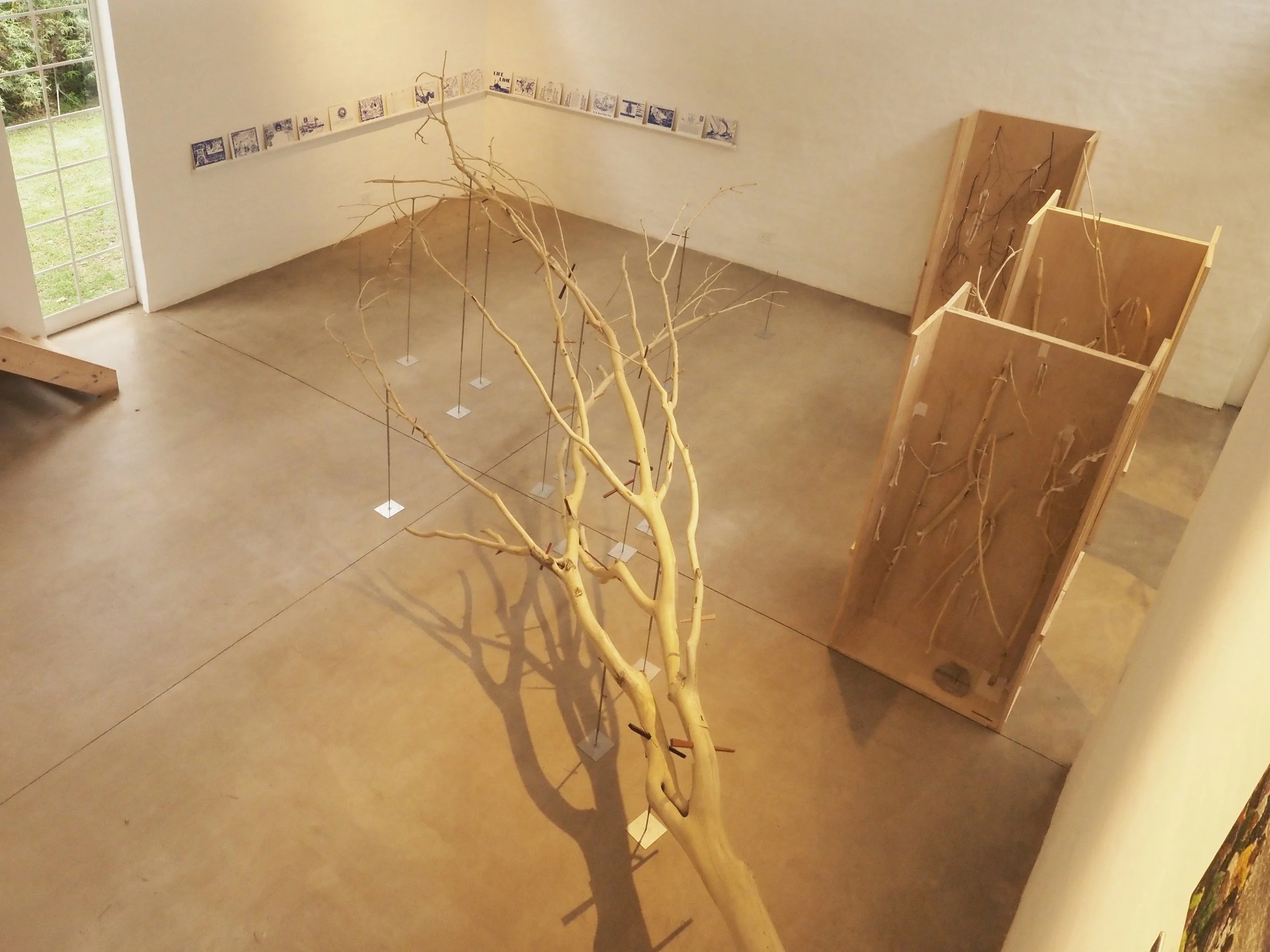
SOIL & WATER
2 November 2025 – 11 January 2026
CURATORS Johan Thom and Basak Senova
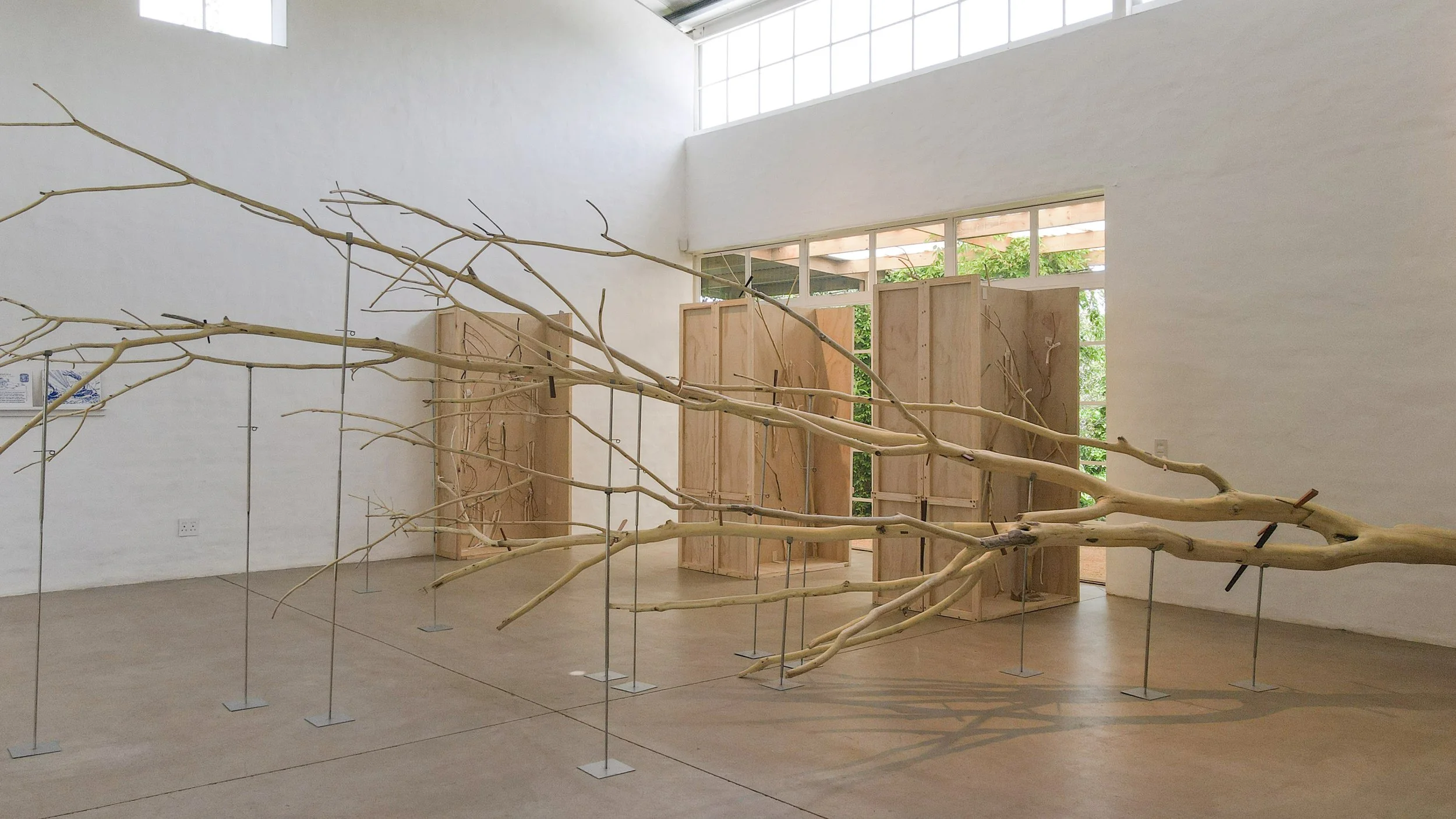
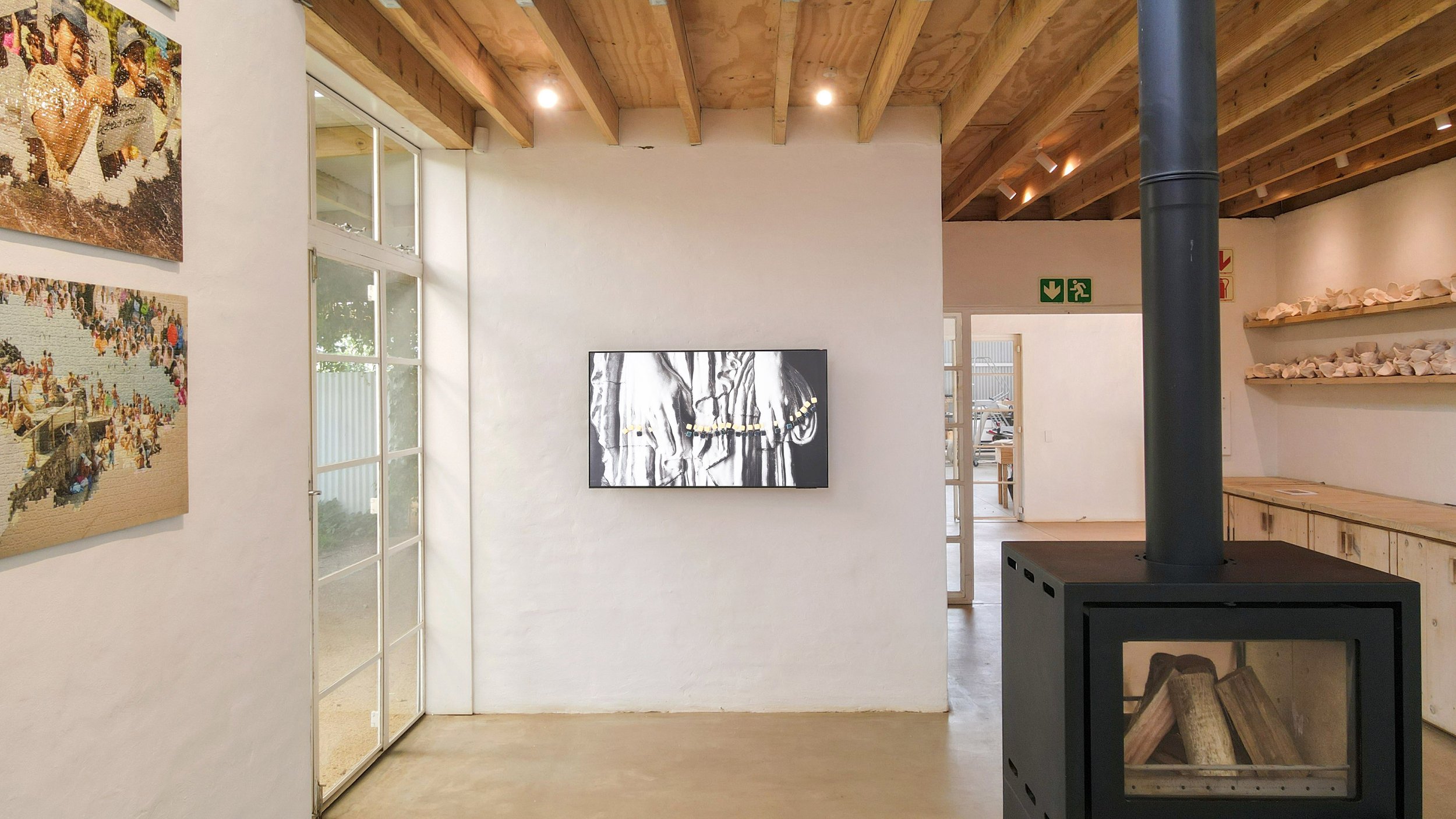
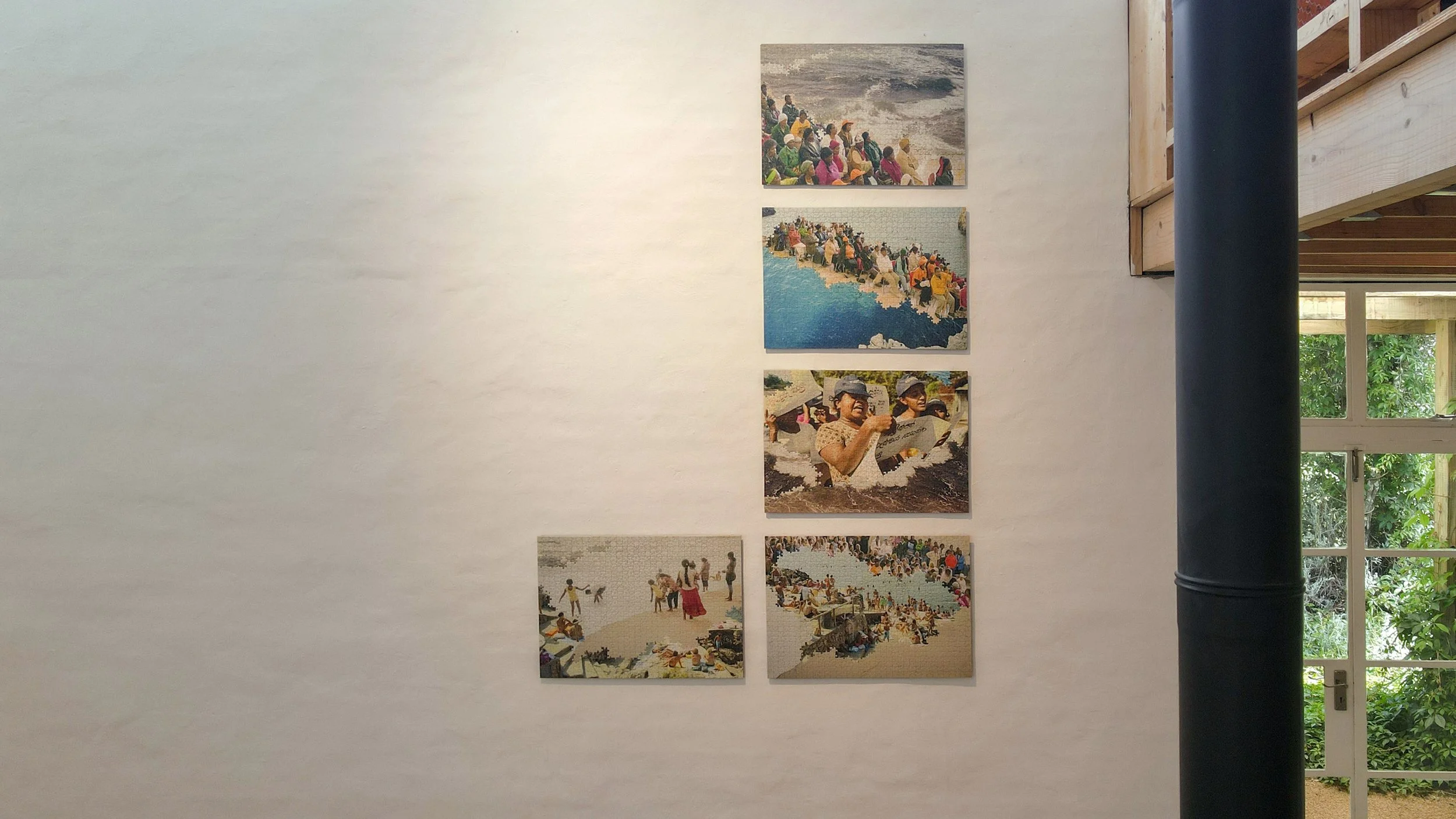
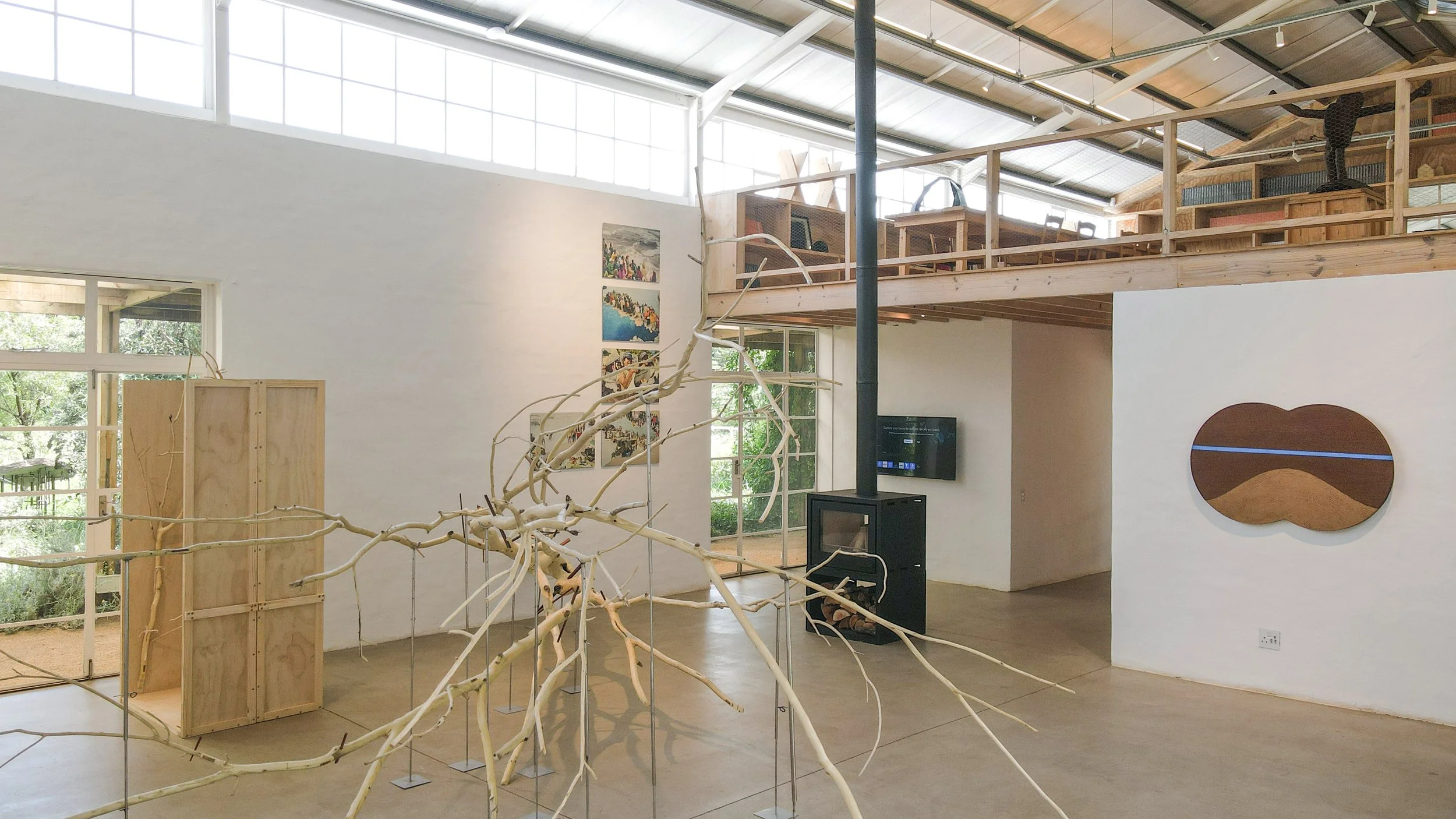
ARTISTS Diana Vives and Douglas Gimberg; Johan Thom; Seretse Moletsane; Maria Lantz;
PHOTOGRAPHY Ntate Phakela
WEBSITE www.soilandwater.net
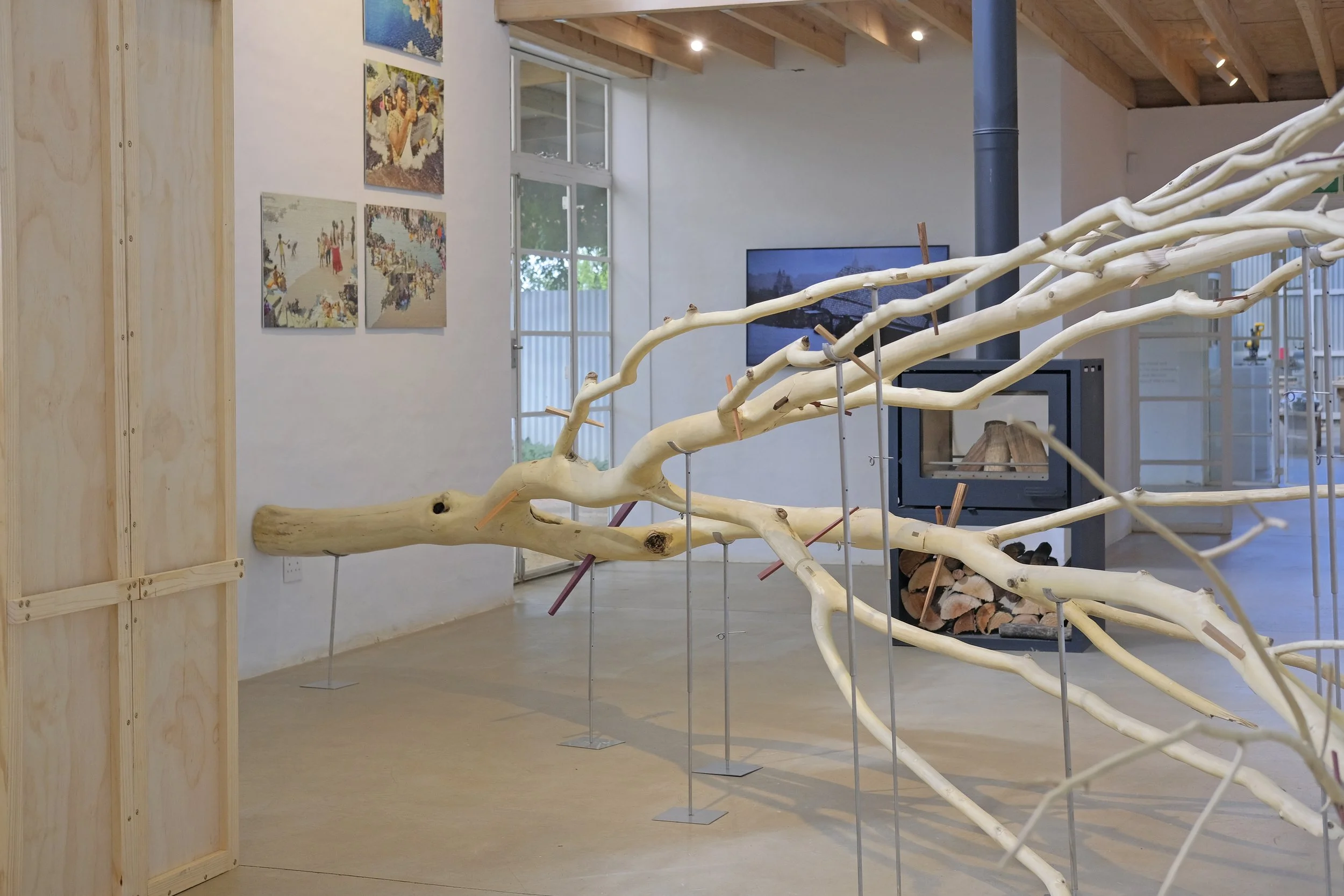
SOIL & WATER is a large-scale artistic research project located in the heart of the Cradle of Humankind, South Africa. As such SOIL & WATER is uniquely positioned to serve as a dynamic, modular platform for in-depth reflection on the delicate balance between soil and water - the two key material substances that define and support the continued existence of life on earth. The project outcomes comprise a series of public exhibitions, artist residencies, public programmes including dialogues, performances and concerts, a community engagement and research initiative, and finally, a publication.
SOIL & WATER was collaboratively developed by Prof. Johan Thom (Pretoria), Assoc. Prof. Dr. Basak Senova (Vienna) and the NIROX Foundation in South Africa. The project is supported by a broad range of partner organisations from the public and private sector, including international arts organisations, governmental agencies and funding programmes.
The project aims to give form to the delicate balance between soil and water on Earth. This balance preserves the integrity of both substances whilst also serving as the foundation for the emergence of new forms of life and self-expression within the broader ecology.
The ongoing, balanced interplay between water and soil is essential for all ecosystems. Water, sourced from various origins such as rainfall, rivers, and underground reservoirs, plays a significant role in shaping soil composition, structure, and fertility. Acting as a conduit, water facilitates the transportation of vital nutrients within the soil. While water contributes to alterations in the landscape through processes like erosion and deposition, soil functions as a storage reservoir, managing water movement and mitigating the adverse effects of droughts and floods, for example.
SOIL & WATER seeks to highlight the broader landscape and the interconnectedness of multiple ecologies and knowledge systems. The project actively encourages a critical understanding of how various cultural perspectives and material practices may shape our perceptions of nature, land, and place. In turn, these practices are informed by the frameworks and values of various communities, including the art world, the scientific community, urban planners, and the general public, for example. The engagement with materiality also invites reflection on how different disciplines, including art, science, policy-making, and local knowledge systems, approach ecological phenomena through distinct tools and assumptions. By placing such diversity at the heart of the project, we seek to gain a deeper understanding of how ecological conditions are interpreted, represented and addressed in various societal contexts too. In this way, the project highlights the importance of transdisciplinarity and cross-cultural exchange as part of the various responses to the environmental urgencies of our time. Exactly because artistic research and practice are always both public-facing and intensely private, it serves as an evergreen, highly visible means to access complex, challenging discussions about the meaning of life and our role and responsibilities in our ever-changing ecosystem.