The Villa-Legodi Centre for Sculpture is a collaboration between NIROX Foundation and the Claire & Edoardo Villa Will Trust. As an artist residency and sculpture park, NIROX provides artists working at the Centre with full board and lodging, as well as access to staff, peripheral programming, and their broader facilities. The Villa Will Trust provides space and resources that enable artists to develop their practice through the research, production, and exhibition of their work.
We invite short and long-term partnerships with other organisations such as universities, schools, museums, galleries, corporates, culture desks and collections in the development of exhibitions, workshops, talks, walkabouts and other educational initiatives geared towards the exchange of knowledge and the study of art, in particular sculpture.
Partnerships to date include the National Arts Council; University of Pretoria; University of Johannesburg; University of the Free State; University of the Witwatersrand; Zeitz Museum of Contemporary Art Africa (Zeitz MOCAA); BMW Collectors Forum; Pro Helvetia; Nedbank; Formes Gallery; and the many artists who have enjoyed the programme.
Johan Thom
Associate Professor and Coordinator: Fine Art (University of Pretoria)
I am more than happy to write you a short letter in support of the important work done by the Villa Legodi Centre for Sculpture.
Overall there can be no doubt about the seminal contribution of the Villa-Legodi Centre for Sculpture to the field of sculpture, education and art in South Africa.Before I delve into any specifics it is well worth noting that given its focus on the study, production and advancement of sculpture, the Villa-Legodi is unique in South Africa. In fact it may very well be the only one of its kind in the whole of Africa. (Though numerous art centres exist globally exceedingly few are in fact dedicated foremost to the study and production of sculpture as artistic form).
The Villa-Legodi provides plenty opportunities for existing sculptors to produce work and present workshops. Importantly it does so in a way that fosters genuine mentorship between young students and extremely experienced artists of the highest calibre from all over the world, including South Africa. The exhibition program is of an excepting high standard overall and serves to extend the appreciation and study of sculpture not only in academic circles but also by the broader public. From my own experience of regularly attending exhibition openings I also know how many people (including artists, students, curators, art historians and members of the general public) visit the exhibitions and events at the centre too. If the field of sculpture is to remain relevant and flourish such broad public engagement is key. The Villa-Legodi serves as a vital incubator in this regard and we ought celebrate its existence in South Africa more
If the Centre were based at a university I can tell you from experience that its contribution would be deeply valued. The various publications about sculptors past and present by the Centre would already justify its continued existence and support. Today the Department of Higher Education in South Africa also values the production of serious artworks by established artists as research and it is therefore worthwhile considering the close relationship the Centre has with many prominent universities (the universities of Pretoria, the Witwatersrand, the Freestate, Johannesburg and Cape town all come to mind immediately). These universities and their respective staff all clearly hold the Centre and its programme in high esteem and have become active partners in its programme in various ways through the opportunities provided thereby.
Finally, speaking as an artist, I think it is worth concluding by referring to the question of lasting legacy and impact. How can one best foster real lasting interest in the life and work of an artist, in the process ensuring that it is not relegated to the obscure depths of specialist interest and historical study only? As an artist one can only hope to have a dynamic centre such as the Villa-Legodi dedicated to furthering your life’s work and artistic vision. A space such as this keeps Edoardo Villa’s work, name and entire artistic legacy visible and relevant to the all the generations of artists who have come after him, now and in future. The fact that this now includes a huge variety of international artists and scholars too (including heads of international arts schools and other globally respected artists) surely exceeds even the great ambitions of Villa.

Associate Professor (Department of Fine Arts, University of the Witwatersrand)
David Andrew
I am writing to express my strong support for the Villa-Legodi Centre for Sculpture and its ongoing and future contributions to sculpture, education, and cultural development in South Africa. The Centre’s vision and activities resonate powerfully with the values and objectives shared by NIROX Sculpture Park, particularly in relation to education, artistic experimentation, and the cultivation of critical and engaged publics for modern and contemporary art.
The Villa-Legodi Centre for Sculpture has established itself as an important platform for thinking through sculpture not only as an artistic discipline, but as a pedagogical and social practice. Its commitment to process, material exploration, and dialogue aligns closely with NIROX Sculpture Park’s broader educational project, which places emphasis on sustained engagement, research-led practice, and the creation of meaningful learning environments beyond the conventional teaching and learning environment.
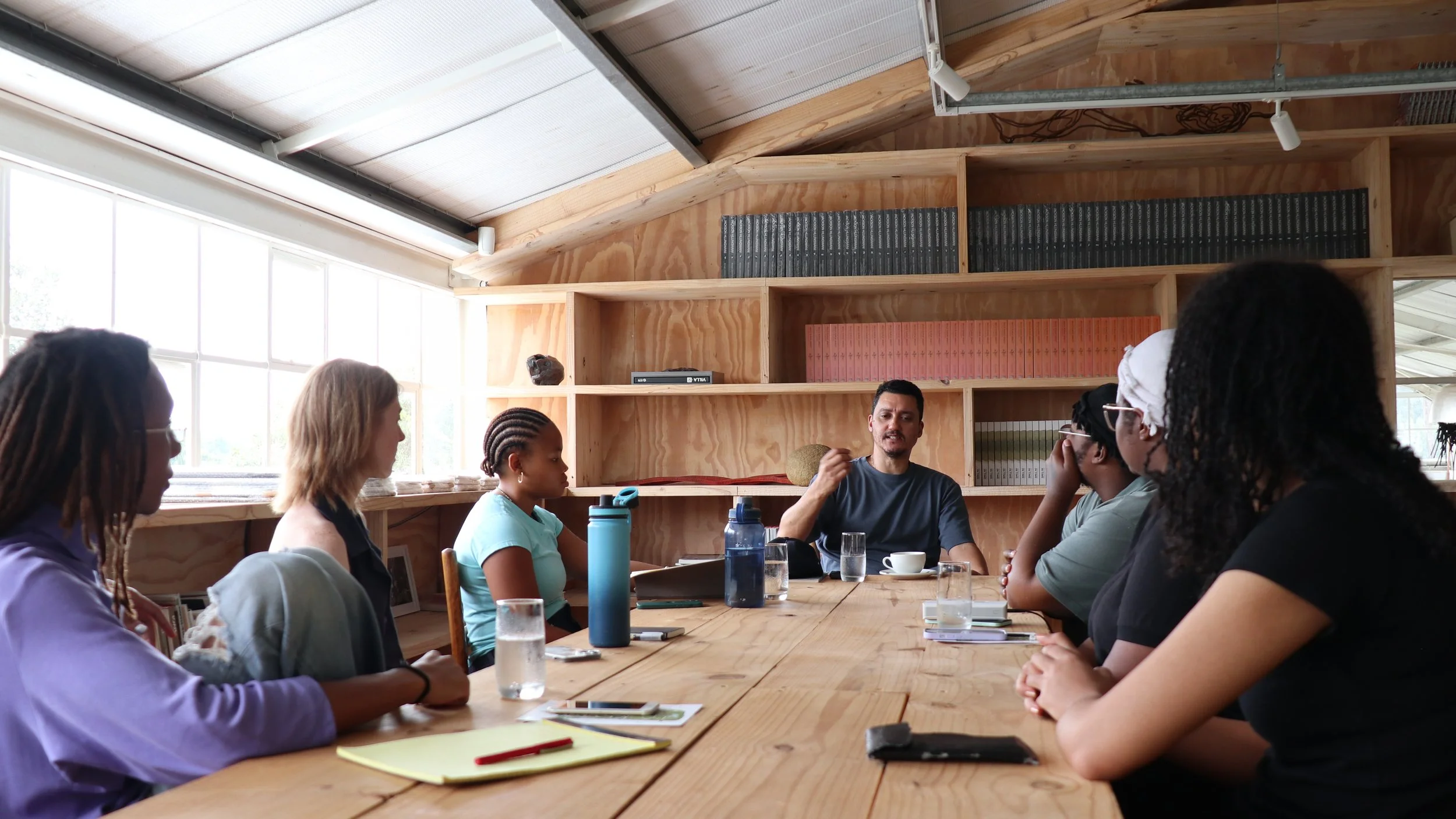
This shared ethos is especially evident in the workshops and educational programmes that bring together students from institutions such as the University of Johannesburg, the University of the Witwatersrand, the University of the Free State, and the University of Pretoria. These encounters offer students rare opportunities to engage directly with sculptural practice at an advanced level, to learn from experienced practitioners, and to situate their work within wider artistic, historical, and environmental contexts. In doing so, the Centre and NIROX together contribute to strengthening inter-institutional exchange and to nurturing new generations of artists and thinkers who are critically attuned to both local and global discourses. The recent Robin Rhode residency [2026] is just one such example of the way in which the Centre affords student groups these opportunities. Bachelor of Arts in Fine Arts/Visual Arts, Master of Arts in Fine Arts/Visual Arts, and Doctoral students from across institutions were invited to engage with Rhode over the course of a day, discussing his practice in relation to those of the students. It is this form of master class workshop that the Centre is able to foster and deliver. In doing so, the Villa-Legodi legacy is extended into the lives of new generations of artists and communities.
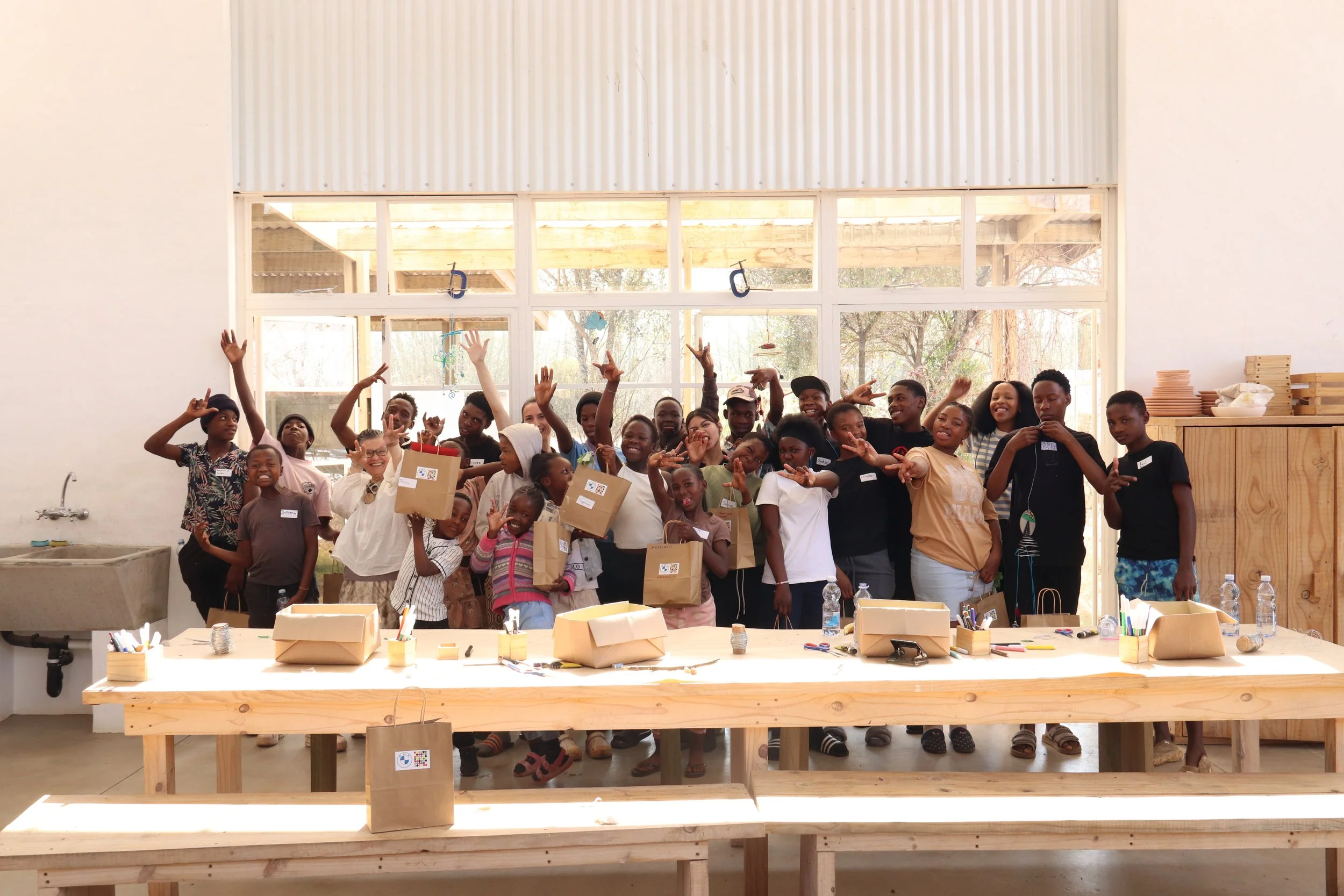
A few days after the Rhode workshop, I attended two events at the Villa-Legodi Centre for Sculpture on the 14 February 2026. The first was a programme for the BMW Young Collectors Forum, and the second, the opening of Rhode’s exhibition. The events attracted different constituencies and publics and demonstrated the Centre’s commitment to developing sustainable ecosystems for art in South Africa. By fostering relationships between artists, institutions, and emerging collectors, the Villa-Legodi Centre for Sculpture plays a vital role in building informed, engaged audiences and in supporting the long-term vitality of the visual arts sector. Such initiatives are crucial not only for artists’ careers, but for ensuring that sculpture continues to be collected, discussed, and valued within contemporary cultural life. And the Rhode example is just one of many that are galvanized around the Centre.
Looking to the future, there is significant potential for the Villa-Legodi Centre for Sculpture to deepen and expand its impact through collaborative projects with university institutions that hold important Villa collections. Here I think particularly of the University of the Witwatersrand, the University of Pretoria, and the University of Johannesburg. Furthermore, the University of the Free State Lottery funded public sculpture collection would present a further opportunity for collaboration, not to mention its Fine Arts department’s long-established partnership with the Modern Art Projects South Africa (MAPSA), in Richmond, Upper Karoo. Partnerships of this nature could support research, curatorial projects, student residencies, and public programmes that bring these collections into active dialogue with contemporary sculptural practice. Such collaborations would meaningfully extend the educational mandate of the Centre while opening new avenues for scholarship and public engagement.
Equally important is the opportunity to develop initiatives aimed at introducing new generations of audiences to the significance of Villa’s work and to broader questions about the future of sculpture in South African contexts. Through exhibitions, publications, workshops, and digital platforms, the Centre is well positioned to contribute to critical conversations about materiality, land, history, politics and form, and about how sculpture can respond to the social and cultural realities of the present.
In this regard, the Villa-Legodi Centre for Sculpture stands as a vital partner to NIROX Sculpture Park and to the wider educational and cultural sector. Its work exemplifies a thoughtful, forward-looking approach to sculpture — one that honours artistic legacy while actively shaping new possibilities for critical learning, collaboration, and public engagement. With the renewed attention to developing the Wits Cultural Precinct project over the next five years, I foresee further opportunities for the Centre to connect with the wealth of Villa sculpture in and around the Wits School of Arts and the Wits Art Museum, not to mention other sites on both the East and West campuses.
I wholeheartedly support the mission of the Villa-Legodi Centre for Sculpture and the work of the Claire and Edoardo Villa Will Trust, and I look forward to seeing how these shared commitments continue to evolve in ways that benefit artists, students, institutions, and audiences alike.

Head of Department and Sculpture Lecturer (University of Johannesburg)
Gordron Froud
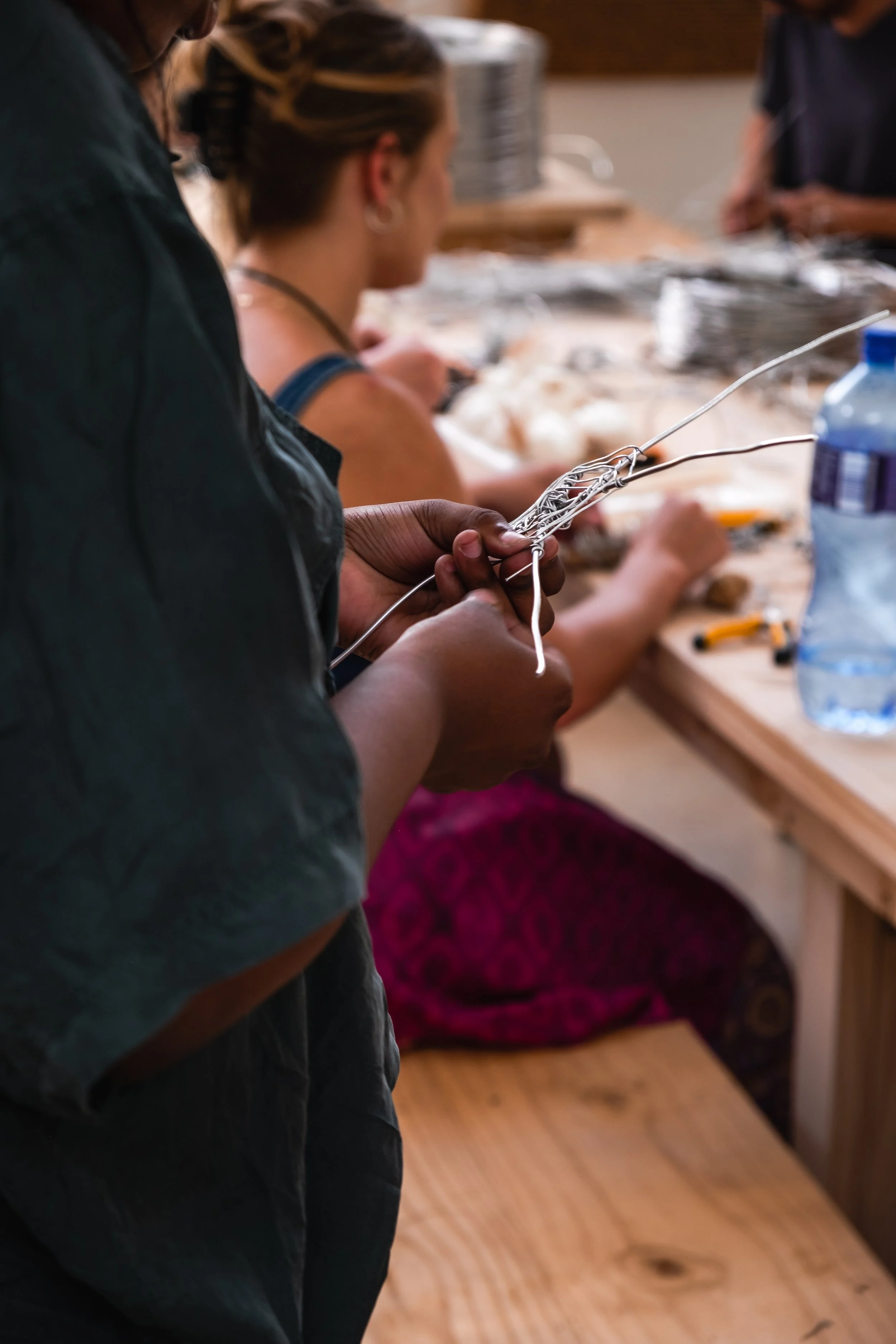
In December 2025, myself and five other practicing artists (Oupa Mokwena, Paballo Majela, Hanelie Coetzee, Simon Moshapo Jr and George Holloway) as well as a group of sculpture majors from the University of Johannesburg (Kabelo Nhlapo, Mbalenhle Sitole, Candice Mkhize, Olivia Bauer-Gunn, Anele Mzolo), spent two weeks at the Villa-Legodi Centre for Sculpture and Kromdraai Impact Hub on a wood-working residency. The aim was to learn more about wood as a medium, and the use of woodworking and construction as a means to make sculpture. This well-established centre has hosted woodcarving workshops and residencies before, led by Collen Maswanganyi, but has not actively focused on wooden construction as a a methodology.Having worked with wood as a medium of construction since my residency in Mediona, Spain (2025), I wanted to extend my learning about carpentry, joinery, and wood to other artists and students. The Villa-Legodi was the ideal place for such a workshop.
The first four days were spent with various presenters talking about wood, carpentry, and joinery, demonstrating how to use various machines and tools, such as bandsaws, electric planes, lathes, routers, sanders, table saws and many more. Demonstrations also included health and safety, and the correct use of machinery and tools. Wood enthusiasts from the carpentry and woodworking fraternity were engaged to share their skills; skills that are being lost as people rely on factory manufactured wooden furniture and fittings as opposed to the hand-crafted bespoke woodwork that many of us grew up with. Some of the artists, and none of the students, had worked with wood as a medium before, and few had learned about construction, joinery, jointing and detailed cabinetmaking. The use of hand tools like chisels, saws, drills, and sanders, as well as discussions around the preservation and finishing of wood, wereinvaluable. This workshop added to their existing knowledge and hopefully sparked enthusiasm for the use of wood. Much of the wood used for making and learning was gleaned from fallen wood on the NIROX grounds. Certainly, the students from University of Johannesburg have (in 2026) embraced wood as a medium for carving and construction, based on their involvement at the Villa-Legodi. Having well-experienced woodcarvers like Oupa Mokwena and Simon Moshapo Jr on the course allowed for the sharing of those skills alongside the carpentry and joinery assisted by artists like George Holloway. Each afternoon (and often into the evening) participants would extend their learning through practice and making, applying the methods learned in the day.
The second week was spent designing and making work. This workshop has awoken the love of wood in many. Reflecting on the two-week workshop, the value of the Villa-Legodi Centre shone through. As a dedicated space for woodworking, its well-equipped workshop, enthusiastic staff (John Nkhoma and Tristin Roland in particular) and awesome facilities, made for a comfortable learning environment. The exhibition, featuring the works of various artists, also inspired the participants in the use of wood. For the students, gettng to know the story of Edoardo Villa and Lucas Legodi was inspiring and paid tribute to the legacy of these great artists in a meaningful way through learning and making. Many participants have become enthused to utilise wood and have begun investing in woodworking tools, both manual and electrical. This opportunity for artists and students to work and learn together has also created a new sculptural network that will produce further collaborations in the future. The value of the Villa-Legodi Centre and the collaboration with NIROX, the Kromdraai Impact Hub is something that cannot be underestimated. The organisation was good; the learnings were rich, and the exploratioon of wood invaluable. We look forward to many more opportunities for workshops, residencies and interactions with the Villa-Legodi Centre and with NIROX. Our grateful thanks to the Claire & Edoardo Villa Will Trust for funding, to the staff of NIROX for their facilitation, and to the enthusiasm of all the presenters and participants that made this a successful learning experience. Through the Villa-Legodi Centre, artists and students have become friends and collaborators.

Prof. Adelheid von Maltitz
Associate Professor (Department of Fine Arts, University of the Free State)
This report reflects on the success of the 2024 student project “Assemblage & Collage”, a ten-day intensive workshop held in partnership between the University of the Free State and NIROX Sculpture Park. The workshop was led by South African artist Prof Willem Boshoff during his residency at NIROX, where he developed a new body of work, including GREY, following ELM, ASH, and OAK. A key strength of the project was the opportunity for students to engage directly with Prof Boshoff’s working process. This gave them access to an established artist’s way of thinking and making, allowing them to observe, participate, and respond to contemporary sculptural practice.
I attended the workshop as a lecturer in a supervisory and guiding capacity and was able to observe first-hand the level of engagement and development of the students’ work over the ten-day period. The value of this kind of sustained engagement is significant and not easily replicated within the structure of the normal academic programme. The Villa-Legodi Centre for Sculpture played a central role in the success of the project. Its facilities, workshop infrastructure, and position within the broader NIROX environment supported both experimentation and production. Access to tools, technical support, and a dedicated workspace enabled students to work ambitiously across materials such as wood, ceramics, and found objects.
The location of NIROX was equally important. The sculpture park and surrounding landscape, including the nature reserve, archaeological and paleoanthropological sites, agricultural areas, and nearby communities, functioned as a living archive. This encouraged students to think more carefully about the relationship between site and material and to develop work that was both conceptually grounded and materially responsive.
Equally important was the way students lived and worked together over the duration of the workshop, which created a focused and immersive environment. The structure of the workshop, together with the physical setup at NIROX, pushed students to produce work beyond more conventional approaches to sculpture. This was reflected in their results, with all but one student achieving a distinction.
The longer-term impact is evident in the case of postgraduate student Foji Sibenoxolo, who began a body of work during the workshop and is currently developing this work further as part of her Master’s research at the University of the Free State. In this way, the workshop has also had a positive impact on the postgraduate programme within the department. This points to the depth of engagement during the residency and its value beyond the immediate timeframe of the project.
Overall, the collaboration between the University of the Free State and NIROX Sculpture Park was highly successful. It gave students access to a professional working environment, direct mentorship, and the space to produce ambitious work. The Villa-Legodi Centre for Sculpture was central to this, providing both the infrastructure and the working conditions needed for focused production.
Given the impact on student development and on our academic programme, we strongly support continuing this partnership on a regular basis. It has made a meaningful contribution to teaching and learning at the University of the Free State, and to the development of emerging artists.